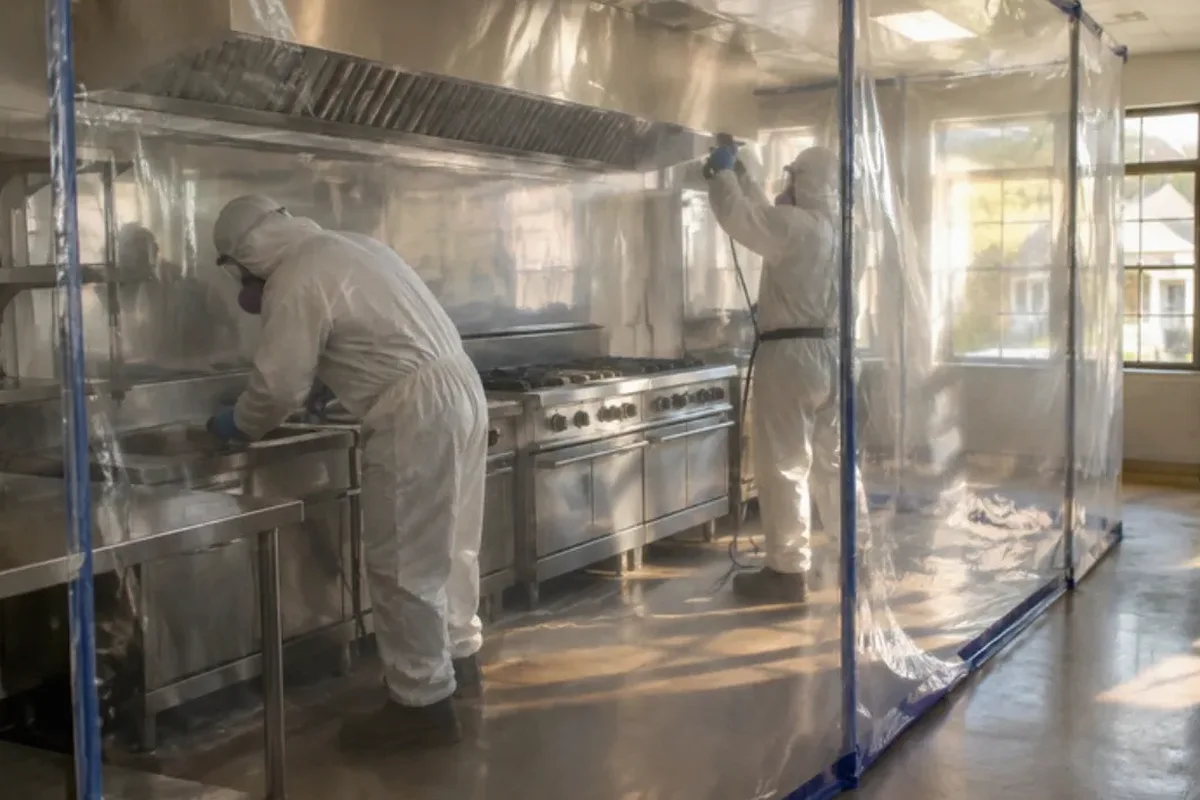
The hard part in an office, kitchen or classroom wing is rarely the mold itself. It is doing the work while people keep using the next room. Evening shifts, plastic walls and filtered exhaust fans are how companies manage it. Call the number on this page to be connected with a local mold company in Glenview.
Ground-floor shops beneath apartments
Two-flats and older mixed-use blocks often put a store below living space, sharing pipes, walls and a roof. A drip upstairs can appear as a stain over the counter downstairs, so tracing water may take a walk through more than one unit. Ask the property manager or the shop below which unit sees the water first.
Busy rooms, heavy humidity
Schools, daycares and fitness studios put breath, shower steam and mop water into the air, and ventilation can lag behind. Weak exhaust fans, or controls that set the system back overnight, let humidity build in classrooms, locker rooms and gym floors. Fixing airflow often costs less than repairing wet walls.
Construction from the 1970s is widespread in Glenview, and renovations there often uncover old leaks behind finishes, so take moisture readings before new work closes the walls.
Close to open water or the lakeshore, businesses in Glenview see more humidity and storm runoff, so roof drains, ground-level walls and storage rooms need regular attention.

Who handles what in Glenview
Before signing, ask the remediation company for its IDPH mold remediation registration and a written scope that covers containment, removal and the final check. The Illinois Attorney General takes consumer complaints about home repair contractors.
Keep the inspection report, the scope of work and any clearance results together; buyers, landlords and insurers often ask for them later.
Rebuild work after the mold comes out, such as new drywall or framing, may need a permit; the Village of Glenview is where to ask for Glenview addresses.
For flood zone questions after a heavy rain, FEMA's flood maps and your insurance agent can confirm the mapped zone for an address.
Companies that take calls here usually also work in Golf, Morton Grove and Northbrook.
A comparison grid for bids
| Topic | Question |
|---|---|
| Containment | How is the zone sealed? |
| Drying | Is equipment included? |
| Debris | Who hauls it off? |
| Rebuild | Who closes the walls? |
Written answers make proposals comparable. Add a line for permits and any special disposal the building may need.
Typical sequence of a job
- An inspector, often an independent assessor, writes a plan.
- The remediation company reviews it and issues a work order.
- The area is sealed, damaged material comes out and surfaces are cleaned.
- The space dries and the water source is repaired.
- A closing check confirms results.
Ask who answers for each stage.
The 24 to 48 hour window
EPA advises drying wet materials within 24 to 48 hours, and a long weekend or holiday can slip past that easily in a business. If water got in and the space remains damp, treat it as urgent, and tell the company when the water arrived. Document the date and time you first noticed the problem.
Glenview at a glance
Calls come in from across Glenview, including around Downtown Glenview, The Glen Town Center, The Grove National Historic Landmark.
Commercial Mold Remediation questions in Glenview
What does a closing check involve?
Who arranges work in condo or apartment common areas?
Is bleach part of commercial cleanup?
Are low-lying or waterfront businesses more exposed?
More mold services in Glenview
Commercial Mold Remediation nearby
Helpful guides
Sources
- Village of Glenview Development Center (Inspectional Services Division)
- Illinois Department of Public Health: mold remediation registration
- Illinois Department of Public Health: mold FAQs
- Illinois General Assembly: Home Repair and Remodeling Act
- EPA: A Brief Guide to Mold, Moisture and Your Home
- Glenview housing by year built
Last updated: