Furniture, boxes and shelving jammed against a damp foundation wall grow mold first. Pulling them a few inches out and looking behind often shows the exact line where moisture arrives. Call the number on this page to be connected with a local mold company in Glenview.
Why Finished Basements Fool People
Layers of carpet, cushion, framing and drywall trap water next to the foundation. Mold can creep behind them for weeks, so what you see on the surface understates what is happening underneath, and the damage may extend beyond the room that smells. Probing early limits the mess.
Hollow Block in Post-War Homes
Ranch and split-level houses often have concrete block walls with hollow cores. When soil is saturated those cores fill, and water escapes through joints or where wall meets slab. The typical sign is a damp strip of carpet running along one side. Water also pools inside the cores.
Houses from the 1970s, which describes many in Glenview, often come with crumbling mortar, aging pumps and window wells that were never meant to handle modern cloudbursts.
Houses near the water around Glenview can take on groundwater whenever the river climbs, and a pump that cannot keep pace leaves carpet and walls damp.
Permits and license checks in Glenview
On Illinois jobs over $1,000, the contractor should have you sign a Consumer Rights Acknowledgment Form when it hands over the state's home repair consumer-rights pamphlet.
Ask whether the company that removes the mold will also test its own work. Many owners prefer an independent assessor for clearance.
Remediation itself is cleanup, but putting the room back together can be permitted work; ask the contractor whether the Village of Glenview needs to be involved.
If river, creek or storm water got inside, FEMA's flood map service and your insurer can tell you how the address is zoned.
Calls from Glenview are often matched with companies that also cover Golf, Morton Grove and Northbrook.
What You Keep Downstairs Matters
Cartons, couches, seasonal decorations and file boxes left on the floor often absorb water. Handling them adds labor. Moving valuables upstairs early shortens the job and gives workers clear access to the walls rather than a maze of clutter. Clearing the room before arrival can noticeably shorten the schedule.
Inside the First Visit
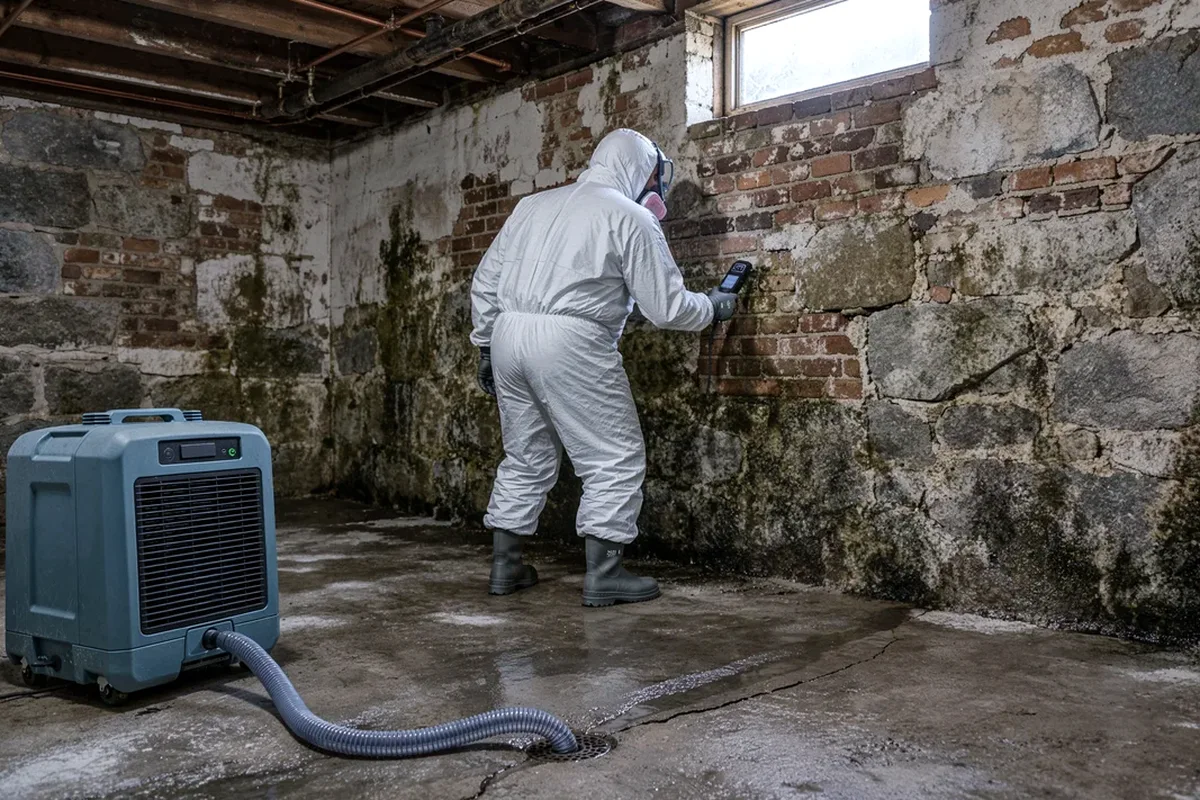
Expect a walk-through with a moisture meter, a look at window wells, the sump and visible plumbing, and a plain explanation of where the water originates. By the end you should know which items come out, which get cleaned and which repairs belong outside the house. Request it in writing.
Same-Day Situations
Pick up the phone right away if water keeps entering, wastewater covers the floor, growth sits near the furnace or ductwork, or soaked items have been sitting for days. Companies bring extractors and drying gear far stronger than a shop vacuum and a box fan. Ask how drying will work.
More about Glenview
Calls come in from across Glenview, including around Downtown Glenview, The Glen Town Center, The Grove National Historic Landmark.
Basement Mold Removal questions in Glenview
Can I scrub basement mold off myself?
Do I need the air tested?
Is a sewage backup treated differently from a leak?
Does finishing a basement make mold worse?
More mold services in Glenview
Basement Mold Removal nearby
Helpful guides
Sources
- Village of Glenview Development Center (Inspectional Services Division)
- Illinois Department of Public Health: mold remediation registration
- Illinois Department of Public Health: mold FAQs
- Illinois General Assembly: Home Repair and Remodeling Act
- EPA: A Brief Guide to Mold, Moisture and Your Home
- Glenview housing by year built
Last updated: