Work in a business building keeps the familiar order: seal off the area, pull out whatever cannot be saved, dry the rest and confirm the outcome. What changes is the planning around staff, customers, hours and paperwork. Call the number on this page to be connected with a local mold company in Westchester.
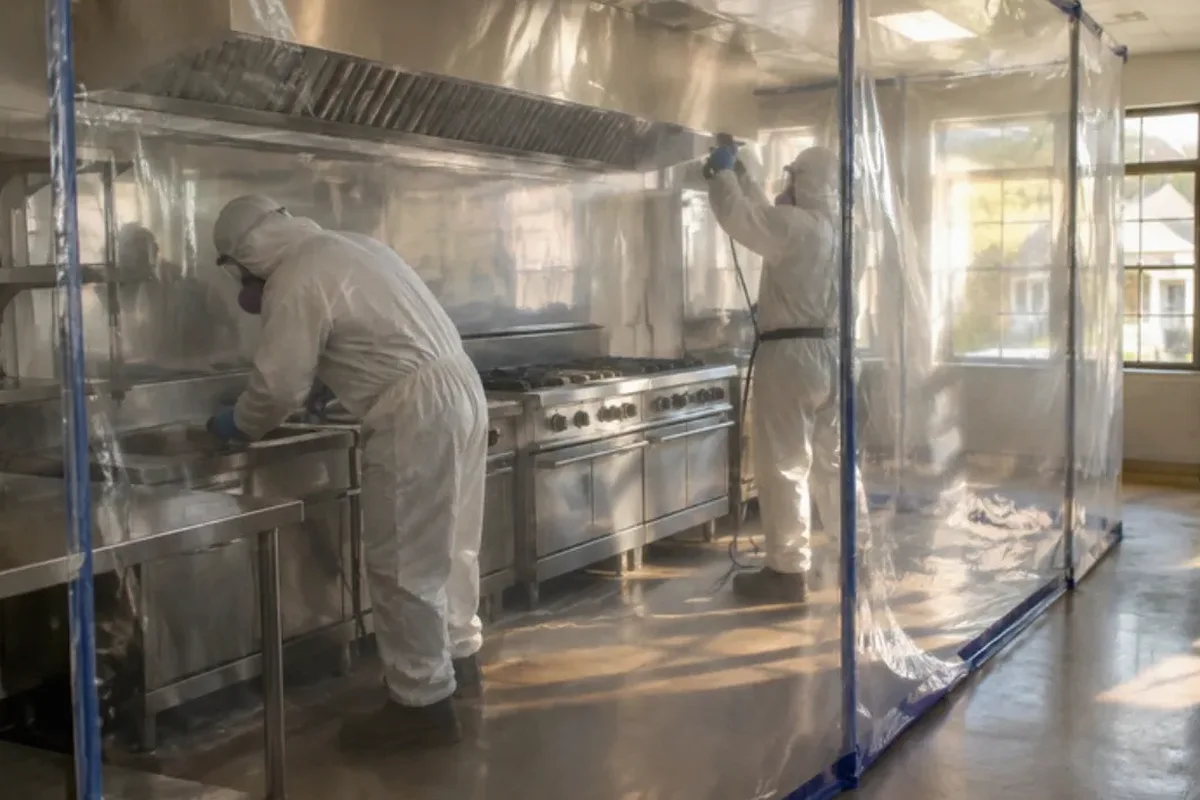
Clues that point to a problem
Look for sagging or tea-stained ceiling tiles, paint that blisters, an odor that comes back whenever the air handler kicks on, and dark film along baseboards or near diffusers. Employees often notice the smell first, well before anyone spots a stain around Melrose Park.
Below-grade storage and mechanical rooms
Many older commercial and mixed-use buildings here keep stock or equipment in a basement. Seepage through brick or block, a stalled sump or a floor drain that backs up in a cloudburst keeps things damp, and growth tends to start behind boxes left alone for weeks.
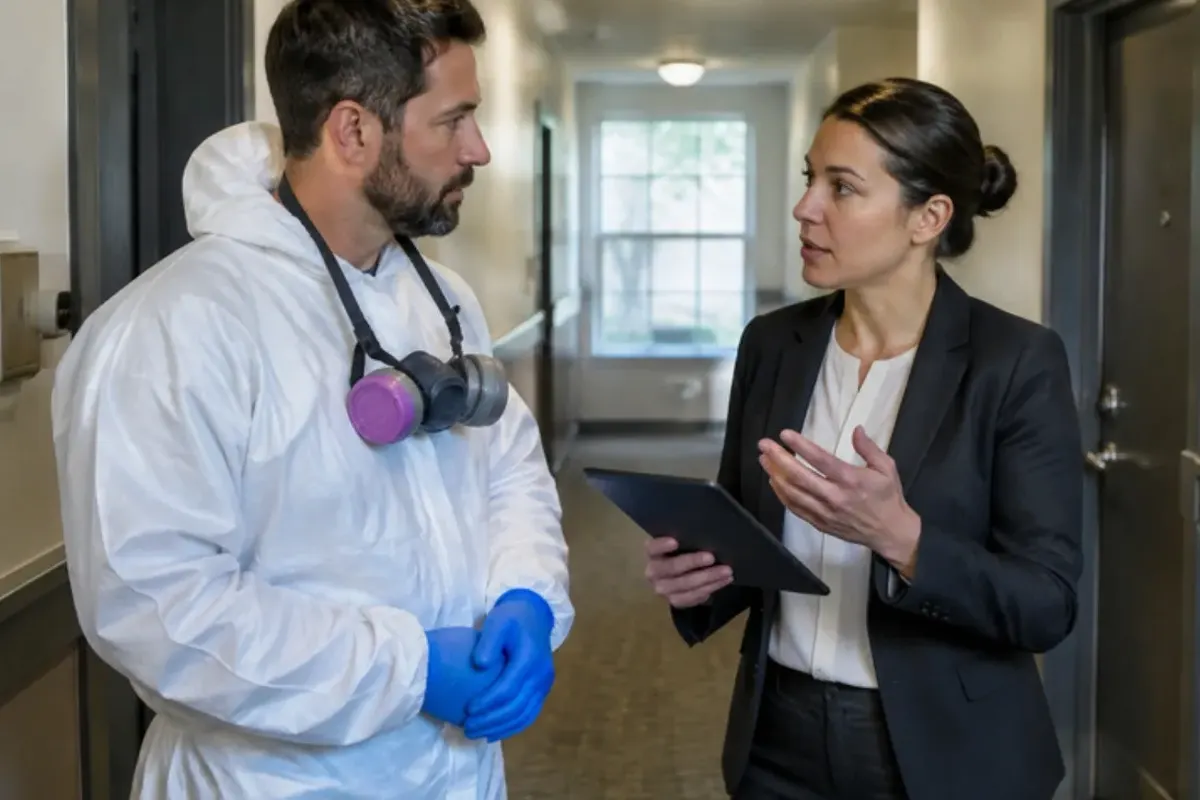
Why occupied space takes more time
Working next to people calls for extra sealing, careful sequencing and sometimes added trips. Plastic walls, filtered exhaust and a separate entrance all lengthen setup. An empty suite goes faster, so explain how the space is used and when it is busiest. Mention any deadlines such as an inspection or a grand opening.
Local details for Westchester
IDPH advises that mold growth larger than about 10 square feet be cleaned up by a professional remediator. Remediation providers in Illinois register with IDPH, so that registration is the first thing to confirm.
Some owners hire one independent company for the inspection and clearance check and a different company for the cleanup, so the business judging the result isn't the one that did the work.
Check with the Village of Westchester before walls, cabinets or flooring go back in if the work goes beyond cleanup.
For flood zone questions after a heavy rain, FEMA's flood maps and your insurance agent can confirm the mapped zone for an address.
Nearby, the same kind of help is available in Melrose Park, Hillside and La Grange Park.
Typical sequence of a job
- An inspector, often an independent assessor, writes a plan.
- The remediation company reviews it and issues a work order.
- The area is sealed, damaged material comes out and surfaces are cleaned.
- The space dries and the water source is repaired.
- A closing check confirms results.
Ask who answers for each stage.
A tour after rough weather
A quick look at roof drains, ceiling corners, basement floors and window sills following heavy rain or a hard freeze catches problems early. Keep a short checklist, and ask the person who opens up each morning to report any new smell or stain that day.
Commercial Mold Remediation questions in Westchester
How is commercial mold work different from a house job?
Does the assessor do the cleanup too?
Who arranges work in condo or apartment common areas?
Should I order air sampling for my building?
More mold services in Westchester
Commercial Mold Remediation nearby
Helpful guides
Sources
Last updated: